San Juan Streets Fill with Protest Over Rising Fuel Prices
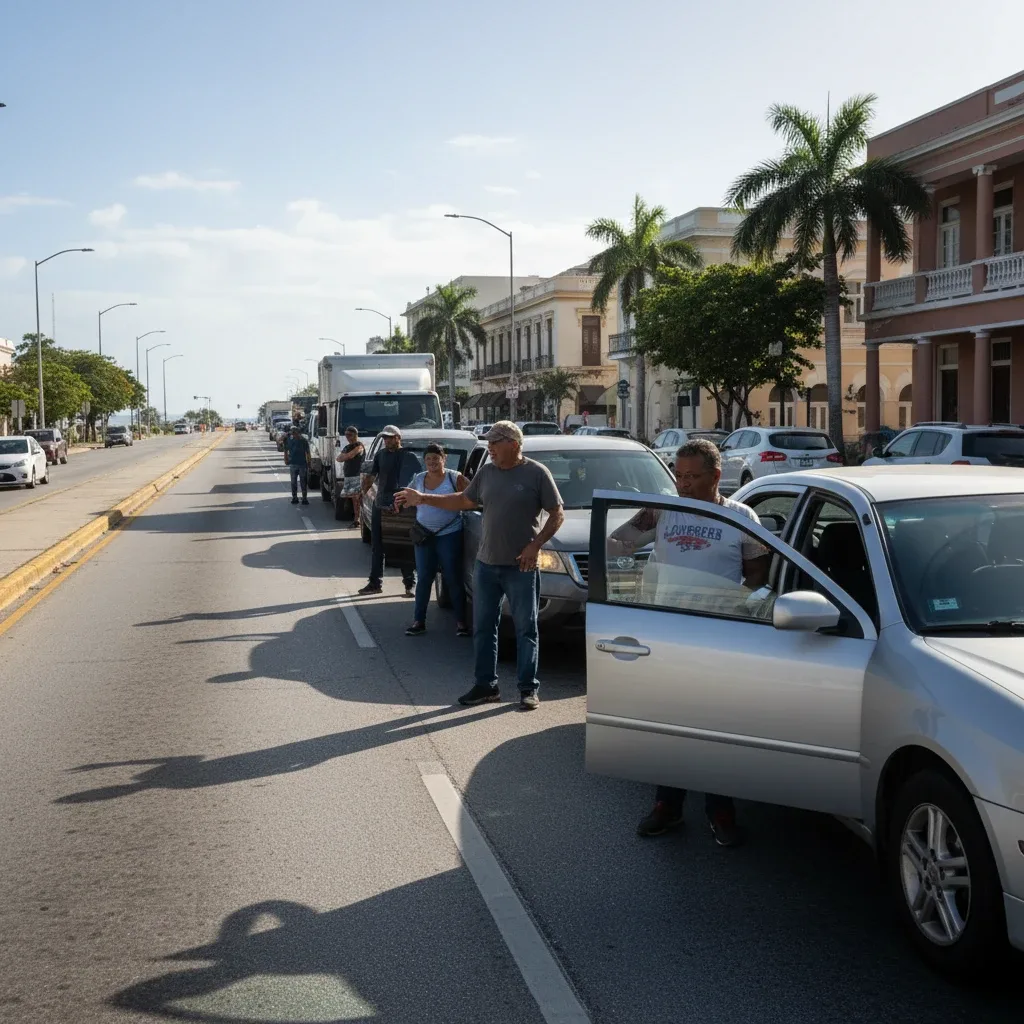
SAN JUAN — Coastal residents in San Juan and Ponce blocked major avenues Wednesday morning as escalating military strikes in the Middle East drove local retail gasoline prices to a record high of $1.28 per liter. The dramatic price surge has triggered widespread community protests, with local commercial truck drivers and daily commuters demanding immediate fuel tax relief from the central government.
CBS News reported that the collapse of the U.S.-Iran ceasefire has halted container ship traffic through the Strait of Hormuz, causing global crude prices to jump past $95 a barrel. Because Puerto Rico depends almost entirely on imported petroleum for both transportation and electrical generation, global maritime disruptions have had an immediate, severe impact on the island's domestic economy.
Commuters Block Ponce de León Avenue in Santurce Protest
Scores of vehicles parked across the main lanes of Ponce de León Avenue near the Stop 22 intersection, halting public bus service and diverting thousands of morning commuters. Protest organizers erected banners demanding that the Department of Treasury suspend the local fuel import excise tax, commonly known as the "la crudita" surcharge.
Local police units from the San Juan municipal force monitored the demonstration but did not attempt to clear the roadway, allowing protest leaders to address the crowd. This sudden economic shock is compounding existing challenges, including worries over how the Middle East escalation sparks inflation and disrupts maritime shipping lanes across the Caribbean basin.
Union Representative Marcos Vargas Demands Emergency Legislative Action
"We are looking at an unsustainable economic situation where a working-class family must spend over twenty percent of their weekly income just to put fuel in their vehicle," Frente Amplio de Camioneros representative Marcos Vargas said during the midday rally. "If the government does not suspend the crude oil tax by Friday, we will initiate an island-wide transport strike that will halt all cargo movement from the ports."
Vargas added that shipping companies are already adding fuel surcharges to food imports, raising the cost of basic consumer goods. Municipal leaders are warning that prolonged port disruptions could lead to temporary shortages of fresh produce and dairy products within weeks.
Maritime Freight Data Projects Rising Import Surcharges
Economic data from the Puerto Rico Port Authority indicates that ocean freight carriers have increased their bunker adjustment factors by 18 percent since the start of the conflict. This increase is expected to add approximately $350 to the shipping cost of every standard cargo container arriving at the Port of San Juan.
- Retail diesel prices have risen by 24 percent in thirty days
- Over 85 percent of all food consumed on the island is imported via maritime shipping
- The local fuel tax generates an estimated $210 million in annual municipal revenues
Central government officials caution that suspending the fuel tax would violate existing fiscal recovery agreements with the Financial Oversight and Management Board. They argue that the lost revenue would have to be offset by budget cuts in other essential public services, such as education and municipal road maintenance.
Historical Vulnerability of the Island's Energy Import Model
Puerto Rico’s extreme vulnerability to global oil shocks is a direct result of its historical reliance on imported fossil fuels, which generate over seventy percent of the island's electricity. While mainland jurisdictions have diversified their energy portfolios with natural gas, wind, and domestic oil, the island has remained dependent on foreign petroleum imports.
Historically, prior global energy crises in 1973 and 2008 triggered severe recessions on the island, leading to mass migration to the United States mainland. The current price spike occurs at a delicate time, as the island is still recovering from its long central government bankruptcy exit and struggling to modernize its fragile public infrastructure.
Community Boards Organize Carpooling Networks in Ocean Park
In response to the rising costs, community boards in Ocean Park and Condado are establishing voluntary carpooling registries to help neighbors reduce fuel consumption. These grassroots initiatives are designed to assist service workers who must travel from outer municipalities to their jobs in the metropolitan tourist zone.
But organizers stress that municipal carpooling is only a temporary band-aid for a systemic national issue. The Puerto Rico House of Representatives has called for an extraordinary legislative session on Monday to debate a partial suspension of the fuel tax for low-income families.
Frequently Asked Questions
How does the current fuel tax suspension proposal interact with the federal fiscal control board guidelines?
Any modification to the local tax structure must be approved by the Financial Oversight and Management Board under PROMESA regulations. The board has historically rejected tax cuts that are not accompanied by matching expenditure reductions, meaning lawmakers must find alternative budget cuts to secure board approval for fuel tax relief.
Are there public transportation alternatives in San Juan that commuters can use to avoid fuel costs?
The San Juan metropolitan area is served by the Tren Urbano heavy rail line and the AMA public bus network. However, public transit coverage is limited outside the urban core, leaving residents in adjacent municipalities like Carolina, Bayamón, and Guaynabo with few practical alternatives to daily driving.
Written by
Newstrix AI
Encanto News